
Every time you place a bet, something extraordinary happens inside your brain that you cannot see, cannot feel directly, and almost certainly do not consciously understand. A cascade of neurochemical events unfolds in fractions of a second, involving some of the oldest and most powerful circuits in the human nervous system. At the centre of this cascade is dopamine, a neurotransmitter that has been misleadingly called the “feel-good chemical” for decades but actually does something far more interesting and far more relevant to understanding why gambling is so compelling. Dopamine does not simply make you feel good when you win. It makes you want to keep playing whether you win or not, and understanding how it does this is the single most valuable piece of knowledge any gambling player can possess.
The neuroscience of gambling has advanced dramatically in recent years, driven by brain imaging technologies that allow researchers to watch the reward system in action during actual gambling tasks. What they have discovered overturns many common assumptions about why people gamble, why some people develop problems while others do not, and what is actually happening in your brain during the moments of anticipation, risk, and outcome that define every gambling experience. This is not abstract academic theory. It is practical knowledge that directly affects how you make decisions at the table, how you respond to wins and losses, and how you recognise when your brain’s reward system is pushing you toward behaviour that no longer serves your interests.
This guide explains the neuroscience in clear, accessible terms, connecting the biology to the real-world experiences that every gambler recognises. By the end, you will understand your own brain better than you did before, and that understanding will make you a more aware, more deliberate, and more self-protective player.
What Dopamine Actually Does (And What It Does Not)
The popular understanding of dopamine is fundamentally incomplete. Most people believe dopamine is the chemical that produces pleasure, the reward itself that makes winning feel good. This is not entirely wrong, but it captures only a fraction of what dopamine actually does, and the parts it misses are precisely the parts that matter most for understanding gambling behaviour.
Dopamine’s primary function in the context of gambling is not to reward you for winning. It is to signal the anticipation of a potential reward and to motivate you to pursue that reward. Neuroscientists describe this as “incentive salience,” the process by which dopamine tags certain stimuli, environments, and actions as worth paying attention to and worth pursuing. When your brain releases dopamine in response to a gambling cue, it is not saying “this feels good.” It is saying “this might feel good, and you should keep going to find out.”
This distinction between wanting and liking is one of the most important discoveries in modern neuroscience. Wanting is the motivational drive to pursue a reward, powered by dopamine. Liking is the actual pleasure experienced when the reward arrives, which involves a partially separate set of brain chemicals including opioids and endocannabinoids. You can want something intensely without necessarily liking it very much when you get it, and this disconnect is at the heart of compulsive gambling behaviour. The player who keeps chasing losses despite not enjoying the experience anymore is experiencing high dopamine-driven wanting with diminished liking, a pattern that the reward system can sustain indefinitely if left unchecked.
| Dopamine Function | What It Does | Common Misconception |
|---|---|---|
| Reward prediction | Signals when a reward might be coming based on learned cues | Dopamine is released only when you win |
| Incentive salience | Makes reward-associated stimuli feel compelling and worth pursuing | Dopamine creates the pleasure of winning |
| Prediction error signalling | Spikes when outcomes are better than expected, drops when worse | Dopamine responds equally to all outcomes |
| Motivation and approach | Drives you to take action toward potential rewards | Dopamine controls enjoyment of rewards |
| Learning and conditioning | Strengthens neural connections between cues and reward-seeking behaviour | Dopamine only operates during conscious decisions |
| Wanting vs liking | Fuels the desire to pursue rewards independent of actual pleasure | Wanting and liking are always linked together |
The Reward Prediction Error: Why Uncertainty Is Addictive
The most critical dopamine mechanism for understanding gambling is the reward prediction error. Discovered by neuroscientist Wolfram Schultz in the 1990s and extensively validated since, the reward prediction error is the brain’s way of learning from experience by comparing what you expected to happen with what actually happened. This comparison drives three distinct dopamine responses that together explain why gambling is so neurologically compelling.
When the outcome is better than expected, a positive prediction error, dopamine neurons fire at an elevated rate. This surge signals to your brain that something unexpectedly good just happened and that you should pay attention to whatever preceded it. In gambling terms, this happens when you win, especially when the win is larger or more frequent than you anticipated. The dopamine spike reinforces the behaviours, environments, and cues associated with that win, making you more likely to repeat them in the future.
When the outcome matches your expectation exactly, no prediction error, dopamine activity remains at its baseline level. There is nothing new to learn, so the system does not need to update. In gambling, this occurs when a predictable outcome happens, which is why guaranteed outcomes produce less neurological excitement than uncertain ones.
When the outcome is worse than expected, a negative prediction error, dopamine activity drops below baseline. This dip signals disappointment and theoretically should teach you to avoid the behaviour that produced the bad outcome. However, and this is crucial for understanding gambling, the negative prediction error from a loss is typically smaller and shorter-lasting than the positive prediction error from an equivalent win. This asymmetry means your brain is wired to weight wins more heavily than losses in its learning process, which creates a systematic bias toward continuing to gamble even when the mathematical expectation is negative.
The reason uncertainty itself is neurologically addictive becomes clear through this framework. In a gambling game where the outcome is uncertain, your dopamine system is constantly generating prediction errors. Wins produce positive spikes. Near misses produce complex mixed signals. Losses produce dips that are quickly overwritten by the next spike of anticipation as you prepare for the following bet. This continuous cycling of prediction errors keeps the dopamine system in a state of heightened activity that the brain interprets as engagement, excitement, and motivation to continue.
| Outcome vs Expectation | Dopamine Response | What Your Brain Learns | Gambling Example |
|---|---|---|---|
| Much better than expected | Large positive spike | Strongly reinforces the behaviour and associated cues | Unexpected jackpot or bonus round on an ordinary spin |
| Slightly better than expected | Moderate positive spike | Moderately reinforces the behaviour | Winning a hand you thought you would lose |
| Matches expectation exactly | Baseline activity, no change | Nothing new to learn, behaviour unchanged | Expected outcome on a predictable bet |
| Slightly worse than expected | Small dip below baseline | Weak signal to avoid the behaviour | Losing a hand you thought was marginal |
| Much worse than expected | Large dip below baseline | Stronger signal to avoid, but quickly overshadowed by next anticipation | Losing an entire bankroll in a session |
| Uncertain outcome pending | Elevated activity during anticipation | Primes the system for maximum response to the result | Watching the roulette ball spin before it lands |
The Near-Miss Effect: Your Brain’s Most Dangerous Glitch
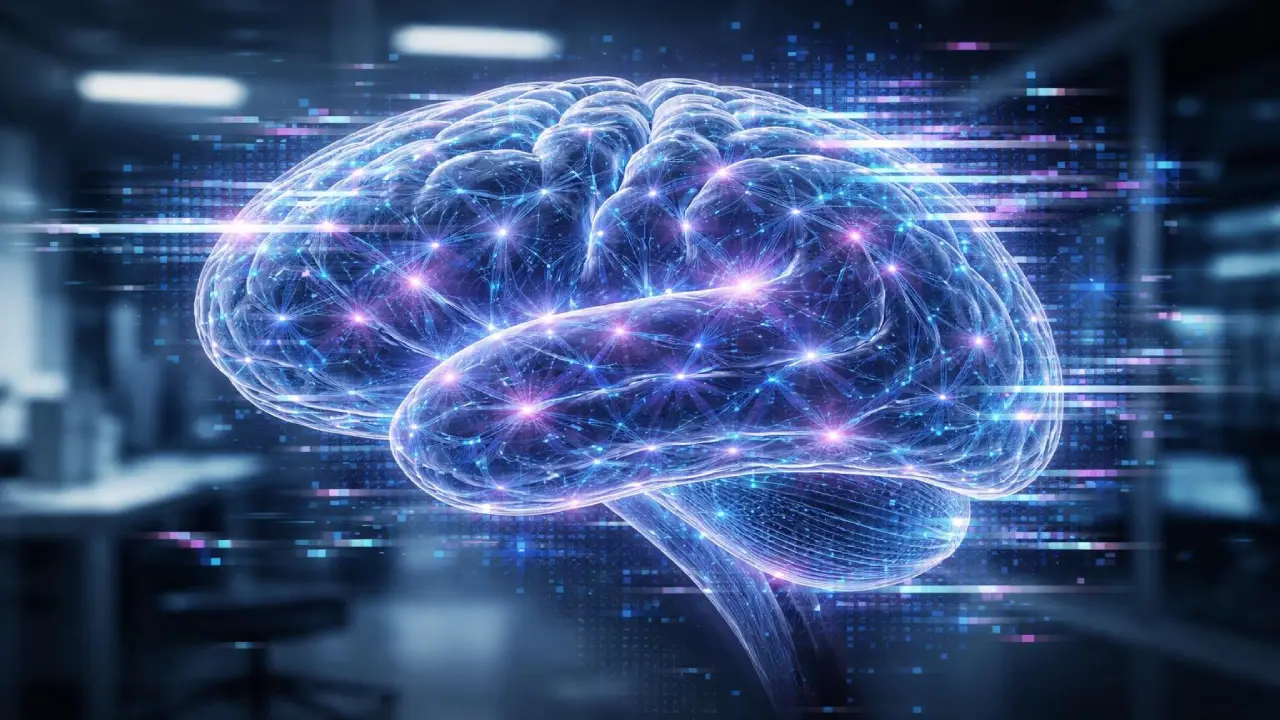
One of the most fascinating and consequential findings in gambling neuroscience is the near-miss effect, the phenomenon where an outcome that comes close to a win but falls short activates the brain’s reward system almost as strongly as an actual win. A slot machine that lands two jackpot symbols with the third just one position away, a roulette ball that bounces into the pocket adjacent to your number, or a poker hand that needs one more card to complete a flush all produce dopamine responses that are disproportionately strong relative to the actual outcome, which is a loss.
Brain imaging studies have consistently shown that near misses activate the ventral striatum, a key region of the reward system, at levels comparable to actual wins. This activation occurs despite the fact that a near miss and a complete miss have exactly the same financial result: you lose your bet. Your rational mind knows this. Your dopamine system does not care. It responds to the proximity of the win as if it were evidence that you are close to success and should keep trying.
The near-miss effect is particularly potent in slot machines, where game designers have studied this neuroscience extensively and, in some cases, engineered near-miss frequencies that are higher than pure random chance would produce. Regulators in several jurisdictions have addressed this practice, but the fundamental near-miss response remains a built-in feature of any game with visible outcomes that can appear “close” to winning. Understanding that your brain treats near misses as encouraging signals rather than what they actually are, which is losses, is one of the most protective pieces of knowledge a gambler can have.
| Near-Miss Scenario | What Actually Happened | What Your Brain Registers | Behavioural Consequence |
|---|---|---|---|
| Two jackpot symbols, third one position away | Complete loss, no payout | Almost won, reward system partially activated | Motivation to continue spinning increases |
| Roulette ball lands one pocket from your number | Complete loss, no payout | Came very close, heightened anticipation for next spin | Increased confidence in the chosen number or strategy |
| Poker hand one card away from a flush | Lost the hand, no winnings | Nearly had a strong hand, reinforces continued play | Tendency to stay in similar situations longer |
| Sports bet lost by one point | Complete loss of wager | Almost right, prediction was nearly correct | Overconfidence in future prediction ability |
| Blackjack bust at 22 | Lost the hand entirely | Was so close to 21, reinforces aggressive play | May hit on hands where standing is the correct play |
How the Mesolimbic Pathway Creates the Gambling Loop
The brain circuitry responsible for gambling behaviour centres on the mesolimbic pathway, a neural highway that connects the ventral tegmental area deep in the brainstem to the nucleus accumbens in the ventral striatum and then forward to the prefrontal cortex. This pathway is one of the brain’s primary reward and motivation circuits, originally evolved to reinforce behaviours essential for survival such as eating, drinking, and reproduction. Gambling hijacks this ancient system by presenting uncertain rewards in a format that the mesolimbic pathway was never designed to handle with rational restraint.
The ventral tegmental area contains the dopamine-producing neurons that initiate the entire process. When gambling-related cues are detected, whether it is the sound of a slot machine, the visual appearance of a casino interface, or simply the thought of placing a bet, VTA neurons begin firing and releasing dopamine along the mesolimbic pathway. Recent research published in Brain in February 2026 has provided new insights into the human VTA’s role in gambling, finding that stimulation of this area affects strategic betting behaviour in ways that challenge previous frameworks about dopamine’s role in reward processing.
The nucleus accumbens receives this dopamine signal and translates it into the subjective experience of excitement, anticipation, and desire that every gambler recognises. This region is rich in dopamine receptors and is one of the most consistently activated brain areas during gambling tasks in neuroimaging studies. Problem gamblers show significantly higher levels of excitement when dopamine is released in this region compared to non-problem gamblers, suggesting that the intensity of the dopamine response may be a risk factor for developing gambling problems.
The prefrontal cortex, which is responsible for executive functions like decision-making, impulse control, and long-term planning, receives dopamine signals from the pathway and theoretically acts as a brake on impulsive reward-seeking behaviour. However, during active gambling, particularly during winning streaks or periods of high emotional arousal, the prefrontal cortex’s inhibitory capacity can be overwhelmed by the strength of the signals coming from the reward system. This is the neurological explanation for why otherwise rational people make irrational gambling decisions: the rational brain is being outgunned by the emotional brain in a neurochemical arms race.
| Brain Region | Role in Gambling | What Happens During Active Play |
|---|---|---|
| Ventral Tegmental Area (VTA) | Produces dopamine, initiates reward signalling | Fires in response to gambling cues and uncertain outcomes |
| Nucleus Accumbens | Processes reward signals, generates excitement | Activates strongly during anticipation and near misses |
| Prefrontal Cortex | Executive control, decision-making, impulse inhibition | Inhibitory function can be overwhelmed during emotional arousal |
| Amygdala | Emotional processing, fear and excitement | Amplifies emotional intensity of wins and losses |
| Anterior Insula | Risk assessment, interoception | Processes the physical sensations of excitement and anxiety |
| Dorsal Striatum | Habit formation and maintenance | Encodes repeated gambling patterns as automatic behaviours |
Variable Ratio Reinforcement: The Most Powerful Schedule in Psychology
The specific pattern of rewards that gambling provides aligns with what behavioural psychologists call a variable ratio reinforcement schedule, which research has consistently identified as the most powerful pattern for sustaining and strengthening behaviour. Understanding why this schedule is so potent reveals why gambling is fundamentally different from most other entertainment activities in its capacity to create compulsive engagement.
In a variable ratio schedule, rewards are delivered after an unpredictable number of responses. You do not know when the next reward is coming, only that it will come eventually if you keep responding. This uncertainty is the key to the schedule’s power because it prevents the extinction of behaviour that would occur if rewards stopped entirely, and it maintains a state of continuous anticipation that keeps dopamine activity elevated between rewards.
Slot machines are the purest implementation of variable ratio reinforcement in any commercial product. Each spin is a response, and wins are distributed unpredictably across an indefinite number of spins. You cannot predict when the next win will come, but you know from experience that wins do come, which motivates you to keep spinning. The variable ratio schedule explains why slot machines are consistently the highest-revenue game in every casino: they are literally built on the reinforcement pattern that psychology has identified as the hardest for the human brain to resist.
Table games operate on modified variable ratio schedules that incorporate skill elements but maintain the core uncertainty that drives dopamine activity. A blackjack player does not know the outcome of any individual hand, even when playing perfect strategy, because the card distribution is random. A poker player does not know what cards their opponents hold or what the remaining community cards will be. This irreducible uncertainty ensures that the dopamine system remains engaged regardless of the player’s skill level.
| Reinforcement Schedule | How Rewards Are Delivered | Behavioural Effect | Gambling Example |
|---|---|---|---|
| Variable ratio | After unpredictable number of responses | Strongest, most resistant to extinction | Slot machines, all RNG-based games |
| Fixed ratio | After a set number of responses | Moderate strength, predictable pauses | Loyalty programmes (earn points per bet) |
| Variable interval | After unpredictable time periods | Strong, steady response rate | Random bonus drops during play sessions |
| Fixed interval | After set time periods | Moderate, activity increases near interval end | Timed promotional offers and daily bonuses |
| Continuous | After every single response | Weakest, behaviour extinguishes rapidly if rewards stop | No casino game uses this (would not be profitable) |
How Wins, Losses, and Near Misses Reshape Your Brain Over Time
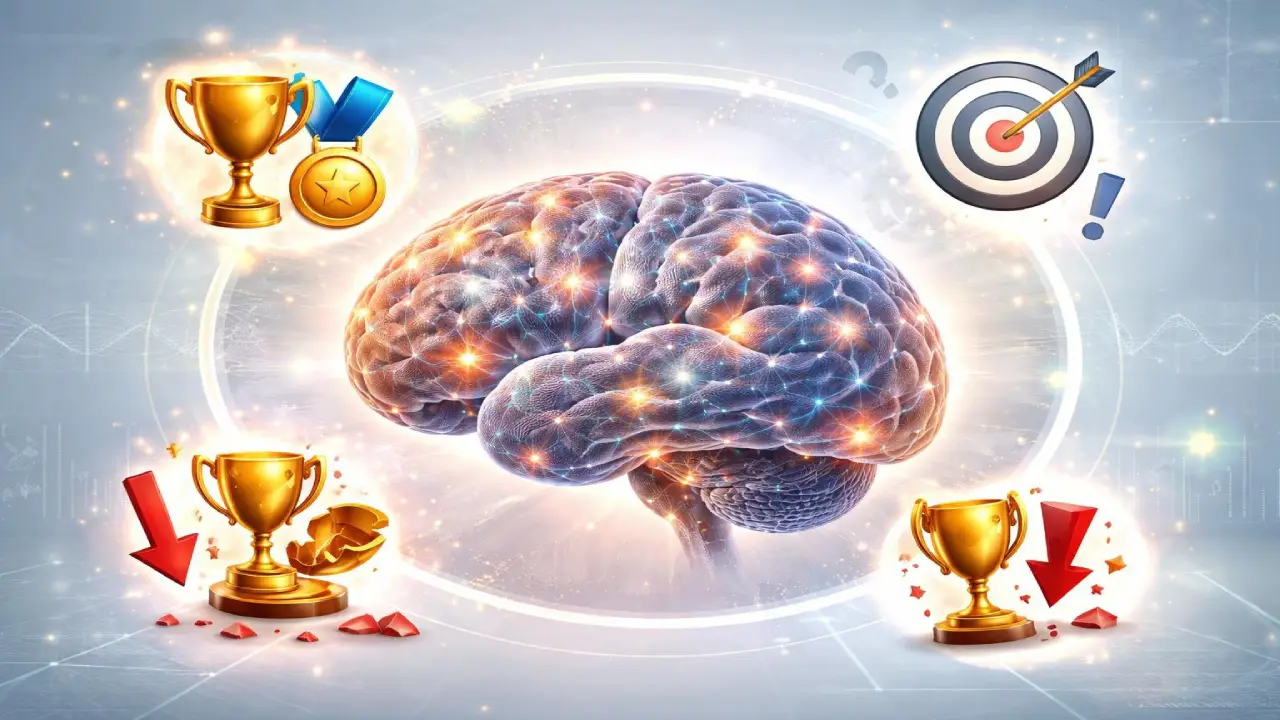
The dopamine responses triggered by gambling are not just momentary experiences that vanish when the session ends. They produce lasting changes in brain structure and function through a process called neuroplasticity, the brain’s ability to physically reorganise its neural connections based on experience. Repeated gambling strengthens the neural pathways that connect gambling cues to dopamine release, making the reward system increasingly sensitive to gambling-related stimuli and increasingly efficient at generating the motivation to gamble.
In chronic gamblers, neuroimaging studies reveal measurable changes in the brain’s reward circuitry. The ventral striatum shows altered dopamine sensitivity, requiring larger wins or higher stakes to produce the same level of excitement that smaller rewards previously generated. This is neurological tolerance, functionally identical to the tolerance that develops in substance addiction where increasing doses are needed to achieve the same effect. The prefrontal cortex shows reduced activity during gambling-related decision-making, indicating that the brain’s impulse control centre becomes progressively less able to override the reward system’s demands over time.
These changes are not inevitable consequences of any gambling. They develop gradually in response to patterns of behaviour that consistently activate the reward system at high intensity over extended periods. Recreational gamblers who play within their means, set time and money limits, and take regular breaks from gambling do not typically develop these neurological changes because their gambling activity does not produce the sustained, intense dopamine activation that drives neuroplastic adaptation.
The encouraging finding from neuroscience is that the same neuroplasticity that creates these changes can also reverse them. The brain is not permanently rewired by gambling. When problematic gambling behaviour stops and is replaced by healthier patterns, the neural pathways gradually normalise. The dopamine system recalibrates, the prefrontal cortex regains its inhibitory strength, and the exaggerated responses to gambling cues diminish over time. Recovery is not just psychologically possible. It is neurologically supported by the brain’s inherent capacity for adaptation.
| Neuroplastic Change | What Happens | Timeline | Reversibility |
|---|---|---|---|
| Cue-reward pathway strengthening | Gambling cues trigger increasingly strong dopamine responses | Weeks to months of regular gambling | Gradually reverses with abstinence or controlled play |
| Dopamine tolerance | Same rewards produce progressively less excitement | Months to years of escalating gambling | Recalibrates over months of reduced gambling activity |
| Prefrontal cortex weakening | Impulse control becomes less effective during gambling | Develops gradually with sustained problematic play | Strengthens with cognitive training and behavioural change |
| Habit circuit encoding | Gambling behaviour becomes automatic rather than deliberate | Repetition over months encodes automatic responses | Requires conscious effort to establish new automatic patterns |
| Stress response alteration | Gambling becomes a learned stress-coping mechanism | Develops when gambling is repeatedly used for stress relief | Replaced by building alternative stress-management strategies |
How Game Design Exploits the Dopamine System
Understanding how dopamine drives gambling behaviour is not just academically interesting. It has direct practical implications because game designers use this neuroscience, whether explicitly or intuitively, to create products that maximise engagement. Recognising these design techniques helps you understand why certain games feel more compelling than others and empowers you to make conscious choices about which products deserve your time and money.
Audiovisual feedback is calibrated to maximise dopamine responses. Winning combinations trigger cascades of lights, sounds, and animations that are designed to make every win, even one that returns less than your original bet, feel like a celebration. Research shows that these celebratory audiovisual cues activate the reward system independently of the actual financial outcome, which means you can experience a dopamine spike from a “win” that actually loses you money. This phenomenon, called “losses disguised as wins,” is particularly common in multi-payline slots where you might bet on 20 lines, win on 3, and receive a payout that is less than your total bet while the game plays a congratulatory animation.
Anticipation mechanisms are designed to extend the dopamine-releasing anticipation phase of each game round. Slot reels that slow down before stopping, roulette balls that bounce between pockets, and card reveals that happen one at a time all serve the same neurological purpose: they prolong the period of uncertainty during which your dopamine system is most active. The longer the anticipation, the more dopamine is released, and the more engaging the experience feels.
Variable reward structures ensure that the dopamine system never habituates to a predictable pattern. If every win were the same size, your brain would quickly learn to predict the reward and the dopamine response would diminish. By varying win sizes unpredictably, from tiny returns to moderate payouts to rare jackpots, games keep the prediction error system constantly active and prevent the neurological boredom that would reduce engagement.
| Design Technique | Neurological Target | How It Keeps You Playing |
|---|---|---|
| Celebratory win animations | Reward system activation on every win | Creates positive dopamine response even on net-loss outcomes |
| Slow reel stops and delayed reveals | Anticipation-phase dopamine release | Extends the most neurologically engaging moment of each round |
| Variable win sizes | Prediction error maximisation | Prevents habituation by keeping outcomes unpredictable |
| Near-miss engineering | Reward system activation without actual wins | Creates false sense of proximity to winning |
| Sound design (coins, chimes, music) | Auditory cue conditioning | Trained associations between sounds and reward anticipation |
| Progress bars and collection mechanics | Goal-oriented dopamine release | Creates motivation to continue playing to “complete” an objective |
| Loss-disguised-as-win feedback | Reward system activation on sub-bet-size returns | Masks losses with celebratory presentation |
Using Neuroscience to Protect Yourself
The purpose of understanding gambling neuroscience is not to make you afraid of your own brain or to suggest that gambling is inherently harmful. The dopamine system is a natural, essential part of human motivation and learning, and the engagement it creates during gambling is, for most people, a positive and enjoyable experience when kept within appropriate boundaries. The purpose is to give you the awareness needed to recognise when your dopamine system is influencing your decisions in ways that do not serve your actual interests, so you can override those impulses with conscious, rational choices.
Set time limits before you begin playing and use an external timer rather than relying on your internal sense of time. During active gambling, your dopamine system creates a state of focused engagement that distorts time perception, making sessions feel shorter than they actually are. An external timer provides an objective reference point that your emotional state cannot influence.
Recognise the near-miss response for what it is: a neurological glitch, not evidence that you are close to winning. When you experience a near miss and feel an increased urge to continue playing, pause and remind yourself that the near miss was a loss with exactly the same financial result as any other loss. The feeling of being “close” is your dopamine system responding to the visual proximity of winning symbols, not a rational assessment of your actual probability.
Monitor your emotional state during play. If you notice yourself feeling increasingly agitated, desperate, or unable to stop despite wanting to, these are signs that your dopamine system has shifted from healthy engagement to compulsive drive. The distinction between wanting to play and needing to play is the boundary that separates recreational gambling from problematic gambling, and dopamine awareness helps you recognise when you are approaching that boundary.
Take regular breaks during sessions. Even a five-minute break away from the screen interrupts the continuous dopamine cycling that sustained gambling creates and gives your prefrontal cortex an opportunity to reassert its influence over your decision-making. The rational assessment you make during a break is more reliable than the assessment you make during active play, because the break reduces the neurochemical pressure that biases your in-session judgments.
| Self-Protection Strategy | Neurological Rationale | Practical Implementation |
|---|---|---|
| Set external time limits | Counteracts dopamine-driven time distortion | Use phone timer, not in-game clock |
| Recognise near misses as losses | Overrides false proximity signal from reward system | Pause after near misses, remind yourself of actual outcome |
| Monitor emotional escalation | Detects shift from engagement to compulsion | Check in with yourself every 15 to 20 minutes |
| Take regular breaks | Interrupts continuous dopamine cycling | 5-minute break every 30 minutes of active play |
| Pre-commit to loss limits | Removes decision-making from dopamine-influenced state | Set limits before playing, when prefrontal cortex is strongest |
| Track session outcomes objectively | Counteracts selective memory that weights wins over losses | Log every session result regardless of outcome |
| Avoid chasing losses | Recognises that loss-recovery urge is dopamine-driven, not rational | Accept the session result and stop when the limit is reached |
When the Dopamine System Becomes Problematic
For the majority of people who gamble, the dopamine system operates within healthy parameters. It creates excitement, anticipation, and engagement that make gambling an enjoyable entertainment activity, and it does not produce compulsive behaviour that overrides rational self-control. For a smaller percentage of people, however, the dopamine system’s response to gambling becomes dysregulated in ways that lead to gambling disorder, a recognised clinical condition that shares neurological features with substance addiction.
Gambling disorder involves changes in the same brain circuits described throughout this article, but at a severity level that fundamentally alters behaviour. The dopamine response to gambling cues becomes so strong that it overwhelms prefrontal inhibition, creating urges that feel irresistible. Tolerance develops, requiring higher stakes or more frequent gambling to achieve the same level of excitement. Withdrawal symptoms, including restlessness, irritability, and depression, emerge when gambling is unavailable. And continued gambling persists despite serious negative consequences in financial, personal, and professional domains.
The neurological basis of gambling disorder means it is not a moral failing or a character weakness. It is a brain condition with identifiable neural signatures, known risk factors, and evidence-based treatments. Cognitive behavioural therapy, motivational interviewing, and in some cases pharmacological interventions targeting the dopamine system have all demonstrated effectiveness in treating gambling disorder. The same neuroplasticity that creates the condition can reverse it when appropriate treatment is applied.
If you recognise any of these patterns in your own behaviour, reaching out for support is a sign of strength, not weakness. Organisations dedicated to gambling support provide confidential assistance that respects your autonomy while helping you regain control over your relationship with gambling. Understanding the neuroscience behind what is happening in your brain makes it easier to seek help because it reframes the experience from personal failure to a neurological pattern that can be changed with the right support.
