

Something curious is happening across the iGaming world. Log into a modern online casino today and you might do a double take. Those endless grids of slot thumbnails are quietly disappearing, replaced by horizontal rows, personalized recommendations, hero banners, and “Continue Playing” carousels that feel oddly familiar. That’s because they are. Casino operators, particularly those competing for attention in mature European markets like Portugal, have started borrowing wholesale from Netflix, Spotify, HBO Max, and Disney Plus. The result is a new generation of lobbies that treat games less like items in a catalogue and more like content in a feed.
This shift, often called the Netflix Effect, is reshaping how Portuguese players discover, engage with, and return to their favourite games. Below is a closer look at why it’s happening, what it looks like in practice, and why it matters for anyone who spends time on a casino site.
From Slot Grids to Streaming-Style Storefronts
For years, the standard online casino lobby looked more or less the same. A long, tiled grid of game thumbnails, a filter bar at the top, and a search box tucked into the corner. Functional, sure, but overwhelming. Portuguese players opening a lobby with over 3,000 titles often faced a paradox of choice, scrolling for minutes before giving up and playing the same game they always play.
Streaming platforms solved this exact problem years ago. Netflix realized early on that browsing is entertainment in itself, but only when it’s well guided. Spotify built its empire on personalized playlists. Casino operators watched, learned, and started rebuilding their interfaces from scratch with those same principles in mind.
What the Netflix Effect Actually Means
The Netflix Effect in an iGaming context refers to the migration of streaming-inspired UX patterns into casino lobbies. Rather than presenting every game equally, operators now surface titles based on the player’s history, mood, time of day, and even the device they’re using. The lobby becomes a living dashboard that reshapes itself with every visit.
Think of it this way. When you open Netflix, you don’t scroll through every film alphabetically. You see rows like “Because you watched…”, “Trending in Portugal”, or “New Releases”. Modern casino platforms do the same thing, only with slots, live dealer tables, jackpots, and crash games.
Key Design Elements Borrowed From Streaming Platforms
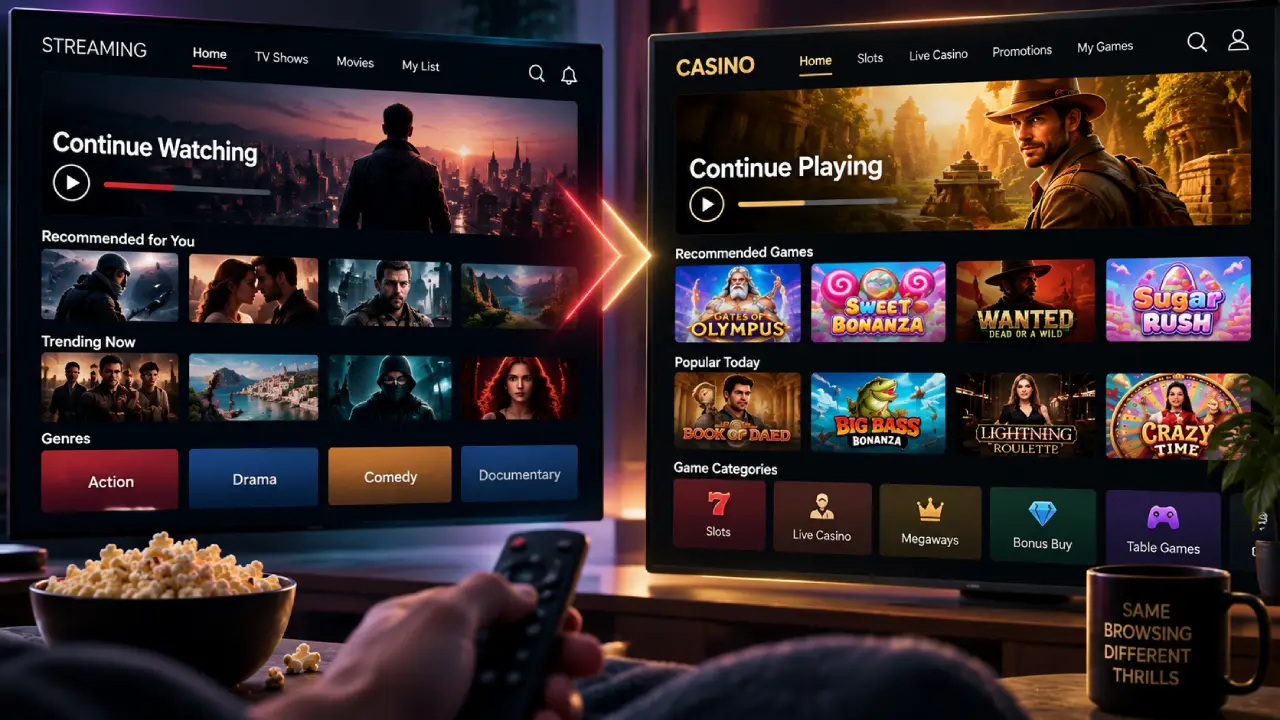
The parallels are more than skin deep. Casinos have adopted specific mechanics that streaming services perfected over the past decade. Here’s a breakdown of the most visible ones.
| Streaming Platform Feature | Casino Lobby Equivalent | What It Does for the Player |
|---|---|---|
| Continue Watching | Continue Playing | Instantly resumes the last game session |
| For You / Recommended | Recommended Games | Suggests titles based on play history |
| Trending Now | Hot Games or Popular Today | Shows what other players are enjoying in real time |
| Genres and Categories | Themed Rails (Megaways, Book Of, Bonus Buy) | Groups similar experiences together |
| Hero Banners | Featured Games and Promotions | Highlights new releases and tournaments |
| Watchlist | Favourites or My Games | Lets players save titles for later |
| Autoplay Trailers | Animated Game Previews | Gives a taste before committing to a spin |
Notice how each pattern serves the same underlying purpose. Reduce friction, respect the player’s time, and make the next enjoyable choice easier to find.
Why Portuguese Players Benefit From This Shift
Portugal’s online gambling market has matured rapidly since regulation opened up, and players have become more discerning. They’re no longer impressed by sheer game volume. They want quality of discovery. This is where the Netflix approach shines.
Well-designed online casinos in Portugal now use these streaming-inspired lobbies to help players cut through thousands of titles and land on games they’ll genuinely enjoy. That means less time wasted scrolling, better matches between player preferences and available games, and a smoother mobile experience for people playing on the go. For someone who logs in after work for a quick session, having their favourites, recent plays, and a curated selection of new releases sitting front and center makes a real difference. It’s the same reason people prefer Netflix to a video shop shelf. Curation is a feature, not a luxury.
The Role of Personalization and AI
Behind every good recommendation row sits an algorithm. Casino platforms are now using machine learning to segment players in ways that were unthinkable five years ago. Volatility preferences, favourite themes, average session length, preferred stake ranges, and even the time of day someone typically plays all feed into the model.
The result is a lobby that gets sharper with use. A player who gravitates toward high-volatility Egyptian-themed slots will start seeing more of them featured. Someone who plays live blackjack every Friday evening will find their preferred tables surfaced first when they log in. This kind of personalization was pioneered by streaming services, and it’s now considered table stakes in premium iGaming platforms.
Content Categorization: Rows, Rails, and Playlists
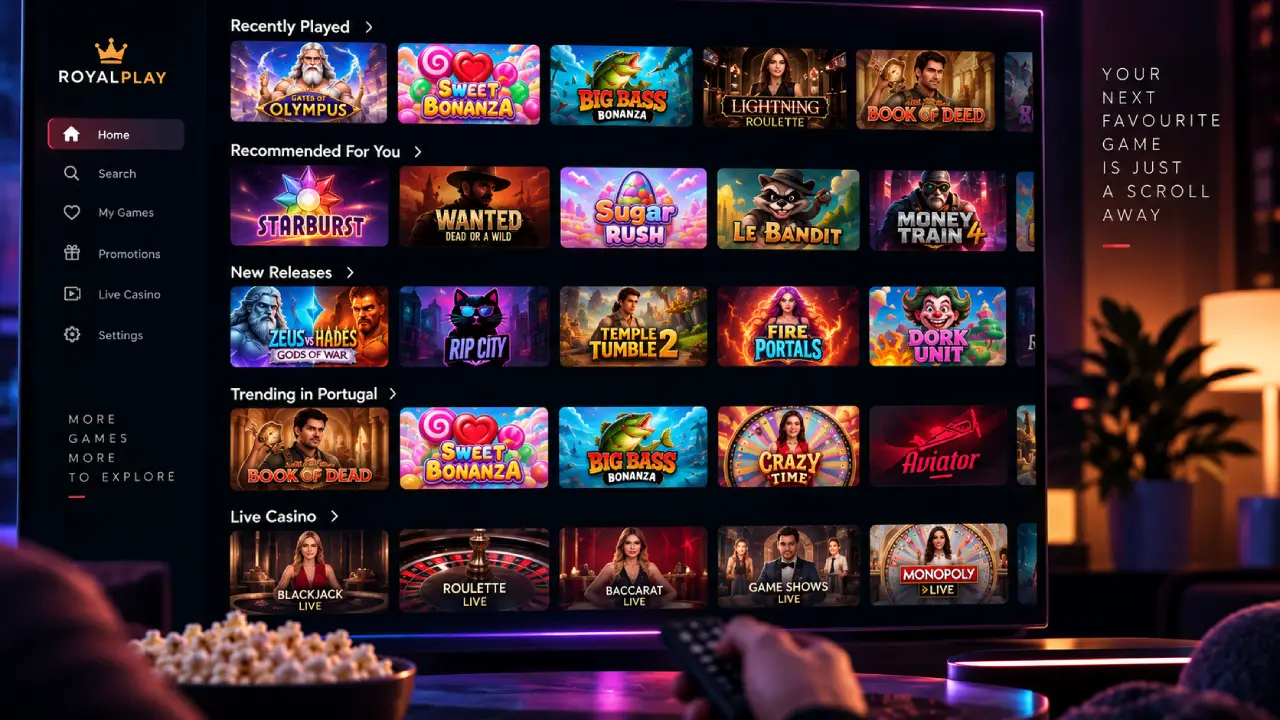
One of the most visible changes is the death of the endless grid. In its place, operators are building rails, the horizontal scrolling rows Netflix made famous. Each rail is themed, contextual, and dynamically ordered. Here’s how a typical modern lobby might be structured.
| Rail Type | Example Contents | Player Value |
|---|---|---|
| Recently Played | Last 6 to 10 games the player opened | One-tap return to any recent session |
| Recommended For You | Algorithmically selected titles | Personalized discovery |
| New Releases | Games launched in the last 30 days | Keeps the experience fresh |
| Trending in Portugal | Most-played titles nationally that week | Social proof and cultural relevance |
| Live Casino | Blackjack, roulette, game shows | Quick access to real-dealer action |
| Jackpots | Progressive prize pools sorted by size | Easy targeting of big wins |
| Exclusive Titles | Games only available at that operator | Reason to stay loyal |
Each rail can be swiped or scrolled independently, mirroring the mobile-first behaviour Netflix and TikTok normalized.
Mobile-First Design and Continuous Play
Streaming platforms taught the world how to build interfaces that work equally well on a phone, a tablet, and a big-screen TV. Casinos are following suit. The most modern lobbies now use responsive layouts, thumb-friendly navigation, and persistent play states that let a player pause a session on desktop and pick it up on their phone during a train ride.
The Continue Playing feature is perhaps the clearest example. It borrows directly from Netflix‘s Continue Watching row, giving players an instant one-tap resume. For many, this small touch removes the biggest friction point in casino UX, which is remembering what you played and finding it again.
What to Look for in a Modern Casino Lobby
Not every operator has caught up with the streaming revolution. If you’re evaluating where to play, a few visual and functional cues separate the modern platforms from the legacy ones.
A truly modern lobby will greet you with a personalized hero banner rather than a generic welcome offer, feature a Continue Playing rail before anything else, offer clearly themed rows instead of alphabetical grids, load quickly on mobile without janky animations, and remember your preferences across devices without forcing you to reconfigure them each visit. When these elements come together, the experience feels less like shopping and more like relaxing into a familiar app.
The Future of Casino Lobby Design
If the current trajectory holds, expect the streaming parallels to deepen. Interactive trailers, short-form video previews of new slots, social viewing features where friends can watch each other play, and voice-driven navigation are all on the horizon. Some operators are already experimenting with AI-generated content descriptions that adapt to the player’s language and tone preferences.
The line between entertainment platforms will keep blurring. In five years, opening a casino app may feel almost indistinguishable from opening a streaming service, complete with seasonal content drops, exclusive game series, and creator collaborations.
