
Ethereum has become the beating heart of Web3 gaming, decentralized casinos, and play-to-earn ecosystems. For players who rely on ETH to fund their digital adventures, the road to ownership almost always passes through a regulated exchange, and in the United States that road most often runs through Binance.US. Yet before a single dollar converts into ether, one truth deserves the spotlight: an unsecured account is a leaking wallet waiting to happen. This handbook walks players through the pre-purchase security ritual that separates careful buyers from cautionary tales.
Why Account Hardening Matters Before Buying Ether
The moment a player links a bank account, credit card, or wire transfer to Binance.US, that profile turns into a small vault. Even before the first ETH transaction settles, the profile holds sensitive identity documents, payment credentials, and full trading history. Attackers rarely aim at the blockchain itself; they aim at the human sitting in front of it. According to industry reporting on 2025 crypto theft trends, phishing, SIM-swap fraud, and credential stuffing accounted for the overwhelming majority of stolen wallets tied to centralized exchanges. Locking things down first, and buying second, is the sequence that protects both the coins and the fun that follows.
The Player-Specific Threat Landscape
Gamers face a slightly different risk profile than long-term investors. They tend to move ETH frequently, connect wallets to Apps, sign transactions from mobile devices, and share screenshots inside gaming communities. Each of those habits creates fresh attack surface. A gaming forum profile that reveals a Binance.US username, or a Discord conversation that mentions a wallet address, hands a would-be thief a starting thread to pull.
Baseline Security Checklist Every Player Should Complete
Before hitting the buy button, walk through a structured setup. The list below is deliberately ordered, because each step reinforces the previous one.
Step One: Reinforce the Email Foundation
The email address tied to Binance.US is effectively the master key. If it falls, everything else follows. Create an email dedicated solely to crypto activity, protect that inbox with its own strong password, and enable two-factor authentication on the mail provider before touching the exchange.
Step Two: Pick a Password That Refuses to Be Guessed
A password manager is a player’s best friend here. Aim for a passphrase of sixteen characters or more, mixing case, digits, and symbols. Never recycle a password used on a gaming site, a marketplace, or a forum, because those platforms are frequent breach targets.
Step Three: Turn On Two-Factor Authentication the Right Way
Binance.US supports authenticator apps and security keys. Both beat SMS by a wide margin. SMS codes travel across telecom networks vulnerable to SIM-swap attacks, while an authenticator app runs entirely on the device and a hardware key requires physical possession.
Step Four: Set an Anti-Phishing Code
This underused feature displays a personal phrase inside every legitimate Binance.US email. Any message missing that phrase is instantly suspicious. Players who receive dozens of promotional emails from gaming platforms will find this filter especially valuable.
Step Five: Whitelist Withdrawal Addresses
Once a player knows which wallet will host their gaming ETH, add that wallet as a trusted withdrawal address. The whitelist option blocks outbound transfers to any address not on the list, meaning even a compromised session cannot drain funds to a stranger.
Comparing Two-Factor Authentication Methods
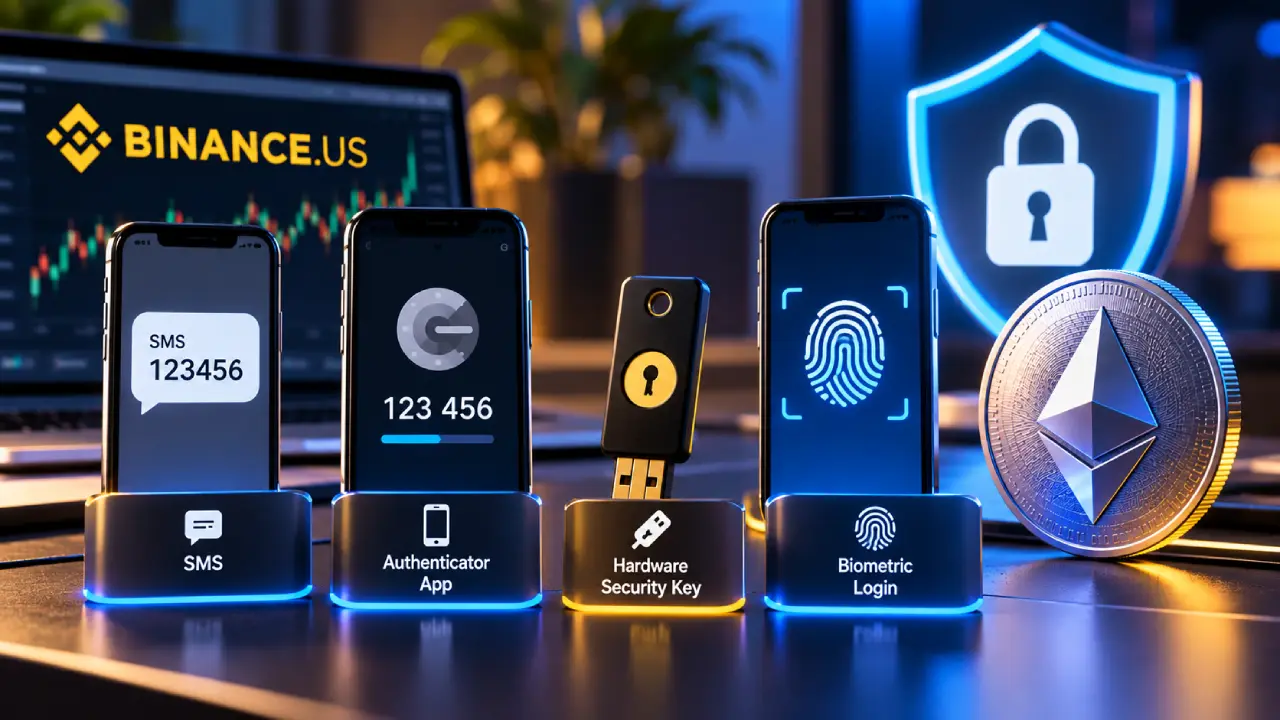
Choosing the right second factor is the single largest security decision a player will make. The table below outlines the trade-offs.
| 2FA Method | Convenience | Resistance to SIM Swap | Recovery Complexity | Recommended For |
|---|---|---|---|---|
| SMS Text Code | Very high | Weak | Simple | Emergency backup only |
| Authenticator App | High | Strong | Moderate | Everyday players and small holders |
| Hardware Security Key | Moderate | Very strong | Higher | Serious players and large ETH balances |
| Biometric App Login | High | Strong when paired | Moderate | Mobile-first players who trade on the go |
A practical setup combines two of the above. Many players enable an authenticator app for daily access and pair it with a hardware key as a fallback that lives in a safe or drawer.
Comparing Wallet Options for Storing Purchased ETH
Buying ETH is only half the journey. Where the ether lives afterwards decides how much sleep a player loses. The choice of storage should be made before the purchase, not after.
| Storage Type | Custody Model | Ideal Balance Size | Speed for In-Game Use | Vulnerability Profile |
|---|---|---|---|---|
| Exchange Account | Custodial | Small, active trading amount | Instant | Depends on exchange defenses |
| Mobile Hot Wallet | Self-custodial | Weekly gaming budget | Fast, one-tap signing | Exposed if phone is compromised |
| Desktop Wallet | Self-custodial | Medium session bankroll | Moderate | Vulnerable to malware on the machine |
| Hardware Wallet | Self-custodial | Long-term reserves | Slower, requires device | Highest protection when handled correctly |
| Multi-Signature Setup | Shared self-custody | High-value guild treasuries | Slow, requires coordination | Excellent, but complex to configure |
A recommended pattern for players: keep a small operational float on Binance.US or a hot wallet for daily play, and sweep larger winnings to a hardware wallet after each session.
Recognizing the Attacks Aimed at Crypto Players
Understanding an enemy makes defense sharper. Below is a summary of the tactics most commonly deployed against exchange users.
| Attack Vector | Typical Delivery Channel | Warning Sign | Immediate Response |
|---|---|---|---|
| Phishing Email | Fake Binance.US notice about deposits or KYC | Missing anti-phishing phrase, off-domain link | Delete, report, do not click |
| SIM Swap | Carrier social engineering | Sudden loss of cellular signal | Contact carrier, freeze exchange account |
| Fake Support Chat | Discord, Telegram, X direct message | Unsolicited help offer, request for seed phrase | Block, report to platform |
| Malicious Browser Extension | Sideloaded from ads or forums | Extension asks for clipboard access | Uninstall, run antivirus, rotate passwords |
| Address Poisoning | Spoofed transactions in wallet history | Similar-looking addresses in recent transfers | Copy addresses from trusted sources only |
Awareness turns most of these threats into a shrug rather than a disaster.
Preparing the Purchase Flow Itself
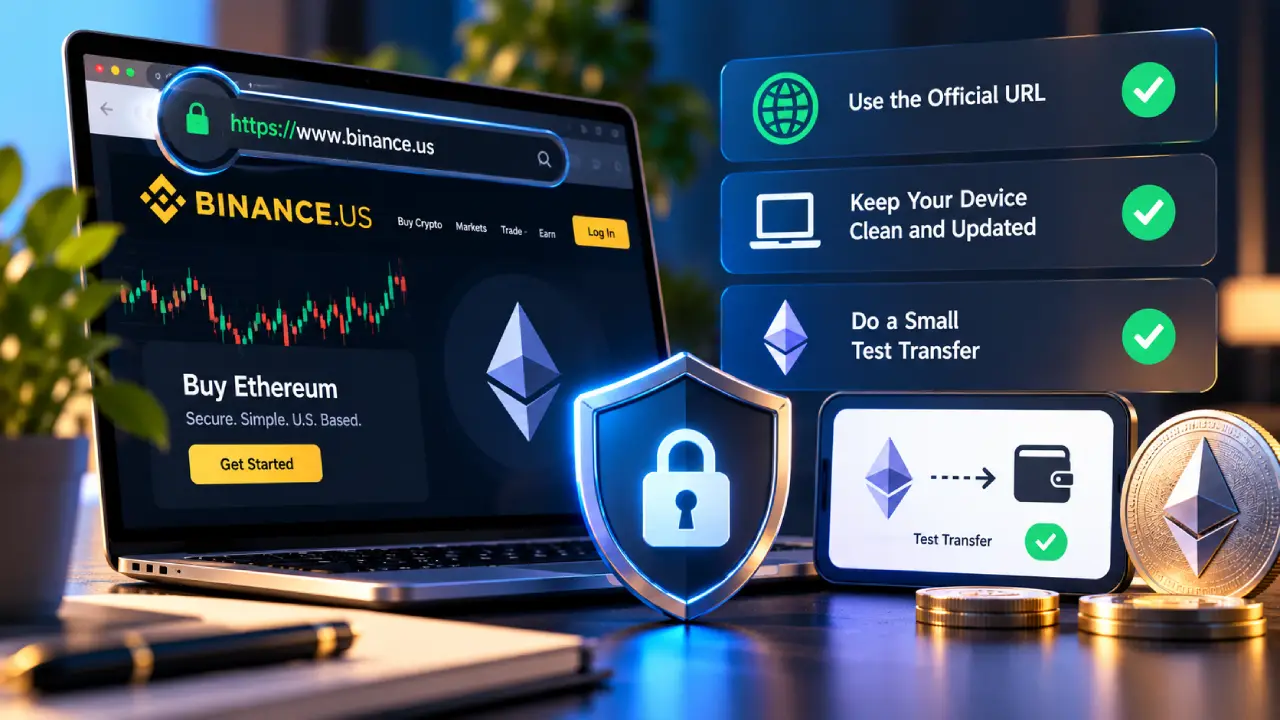
With defenses raised, the actual ETH acquisition becomes almost anticlimactic, which is exactly the goal. A few pre-purchase habits still deserve attention.
Verify the Login URL Every Single Time
Bookmark the official Binance.US address inside a dedicated browser profile and open the exchange only through that bookmark. Never reach the site from a search engine advertisement, because malicious ad placements have redirected users to convincing clones.
Confirm Device Hygiene
Run system updates, check that antivirus software is current, and close any browser extensions that are not strictly necessary. A clean machine buys more security than a dozen configuration tweaks on the exchange itself.
Practice a Small Test Transfer
After purchasing ETH, move a token amount, perhaps ten dollars worth, to the intended destination wallet. Confirm arrival, then move the rest. This tiny habit has saved countless players from typographical disasters.
Why This Discipline Pays Off for Players
Gamers who treat security as a chore end up treating recovery as a nightmare. Those who embrace the routine gain a quieter, more predictable experience. Faster deposits, calmer withdrawals, and fewer worrying notifications add up to more time doing the thing that actually matters: playing. A locked-down Binance.US account also becomes a stable launchpad for cross-platform activities, whether that means staking ETH for passive yield, providing liquidity to a decentralized casino, or funding an NFT purchase inside a favorite title.
The Compounding Effect of Good Habits
Every security measure applied today keeps compounding into the future. An anti-phishing code set once continues to filter fake mail for years. A hardware key configured on a rainy Sunday continues to reject unauthorized logins for its entire lifespan. Compare that to the alternative, where a single stolen session can wipe out weeks of grinding, tournament winnings, or airdrop rewards, and the value proposition becomes crystal clear.
Building a Long-Term Security Routine
Static defenses age poorly. Players should treat account security as a living practice, revisited on a predictable schedule.
| Review Cadence | Task | Time Required |
|---|---|---|
| Weekly | Scan recent login activity in Binance.US | Under five minutes |
| Monthly | Rotate any shared or exposed passwords | Ten minutes |
| Quarterly | Test backup 2FA codes and hardware key firmware | Fifteen minutes |
| Twice per year | Audit connected devices and API keys | Twenty minutes |
| Annually | Review withdrawal whitelist and beneficiary settings | Thirty minutes |
Attaching these tasks to existing rhythms, such as payday or the release of a new game season, helps them stick.
Final Thoughts for the Careful Crypto Player
Ethereum unlocks a spectacular universe of games, guilds, and financial experiments, and Binance.US remains one of the most accessible entry points for American players. The winners in this space are almost never the ones who moved fastest; they are the ones who moved most deliberately. Setting up robust two-factor authentication, choosing a thoughtful storage plan, recognizing phishing at a glance, and rehearsing a review routine may feel unglamorous, yet these habits form the invisible armor that lets a player enjoy every ETH they hold. Purchase the coin only after the account is ready to protect it, and every subsequent gaming session will feel a little more like play and a little less like risk management.
